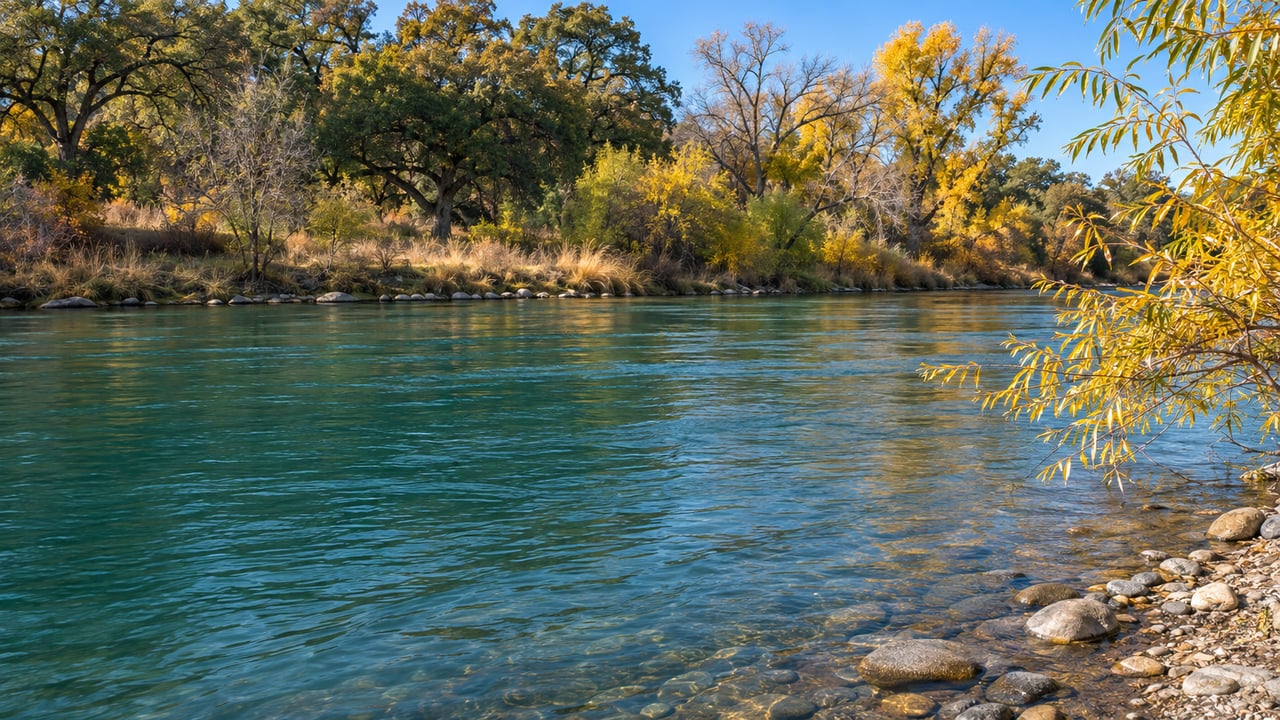
The American River's fall chinook run usually peaks in late November and early December, so Thanksgiving weekend falls right at its peak. The fish swim more than 20 miles upriver and stop at Nimbus Dam, just downstream of the water most of Folsom thinks of as its river.
The usual place to watch is the Nimbus Fish Hatchery, and this year its visitor center and main parking lot are closed with no reopening date. The fish are still arriving, and so the best salmon watching this season is along the river itself, starting at the dam and running a few miles downstream toward Sunrise Boulevard.
The run stops where Lake Natoma ends
Dams limit salmon on the American River to its lowest 23 miles. California State Parks describes Lake Natoma as running from Rainbow Bridge down to Nimbus Dam, and that whole reach is above the dam. The salmon spawning grounds start at the base of Nimbus Dam and run downstream. If you walk the Lake Natoma shoreline near Negro Bar or Willow Creek this month, you're on the wrong side of the dam for salmon.
The dams also explain the hatchery. A California Department of Fish and Wildlife survey report notes that the river's spring-run chinook died out after Folsom Dam was built in 1955. The Nimbus Fish Hatchery was built in 1958 to make up for the spawning and rearing habitat lost behind Nimbus Dam. The same report puts the hatchery's releases at about 4 million chinook a year. A good share of the fish you'll see below the dam this month started out in those raceways.
Nimbus is running, with the doors shut
KCRA reported on Nov. 11 that the hatchery's visitor center will stay closed until further notice. The hatchery says operations are continuing as normal, with fish climbing the ladder and spawning at the facility. The visitor center and parking lot closed on Memorial Day for what was supposed to be a summer break, from May 26 through Sept. 6. They were due to reopen on Labor Day, Sept. 7, and that reopening was postponed.
Abridged, the KVIE news site, reported that the holdup is a lease. The U.S. Bureau of Reclamation owns the visitor center property, and the California Department of Fish and Wildlife runs the facility. Mary Lee Knecht, a Reclamation spokesperson, told Abridged that the two agencies are working through the remaining lease details and that finalizing the lease is a key step toward reopening. CDFW first announced the indefinite delay in a Sept. 4 social media post.
Abridged's reporter described the river past the hatchery on Nov. 10 as "roiling with life," with large Chinook leaping out of the water every few moments. The same story reported salmon arriving at the hatchery in the hundreds and said anyone who wants to see them has to watch from outside the closed gates. Abridged also described visitors watching the fish from an outside walkway that day.
In a normal fall, visitors can feed juvenile fish, take tours with CDFW staff, and stand on the viewing platforms that surround the fish ladder. CDFW's own hatchery page still lists regular visitor hours and parking, so go by the closure reports above until the department announces a reopening. Abridged also reported an earlier disruption at Nimbus. The hatchery closed for two months one summer, and CDFW then said it would cut fish production in half because of a $660,000 funding shortfall.
Downstream from the hatchery, the fish spread out
The river below the dam is where the run is easiest to see this year. CDFW's survey crews divide the spawning reach into sections. Nimbus Basin is the first: a deep pool at the foot of the dam, a riffle and run in the main channel, and two side channels. In 2021 a rock channel was built in the upper part of Nimbus Basin as the entrance to a new hatchery fish ladder.
The next stretch, called section 1, starts at the old hatchery weir site beside the hatchery. The report says it has always had the most spawning activity on the river. In CDFW's survey for October 2020 through January 2021, 53% of processed salmon carcasses were found in section 1 and 35% in Nimbus Basin. Section 1 covers about 4.3 river miles. Its upper half runs 2.6 miles from the weir to the Sunrise Boulevard river access, and its lower half runs another 1.7 miles from Sunrise to the El Manto Drive river access. That is the stretch of river closest to Folsom, and it is where most of the run ends up.
Two Sacramento County Regional Parks sites put you on that stretch.
Sailor Bar is a short drive from Folsom. Take U.S. 50 to Hazel Avenue, turn left on Winding Way, then left on Illinois Avenue, and the entrance is at the bottom of a small hill. The park has a nature trail along the riverbank and a fishing pond near the river. It is open sunrise to sunset all year, and the county currently posts an $8 vehicle fee, collected every day of the year.
Upper and Lower Sunrise sit at the midpoint of section 1. Take the Sunrise Boulevard exit north from U.S. 50 and turn right into the park just before the river overpass. Upper Sunrise has the historic Fair Oaks Bridge. Lower Sunrise connects to Sacramento Bar by the Jim Jones Bridge, which is open only to people on foot, bikes or horses. Sunrise is also open sunrise to sunset with an $8 vehicle fee, and you pay yourself if no attendant is at the kiosk. The county's directions say the hatchery parking lot can be reached only through the Hazel Avenue entrance to Upper Sunrise. That lot is part of this year's closure, so plan to park at Sailor Bar or Sunrise.
If you'd rather ride, CDFW notes that the American River Parkway trail runs right beside the hatchery. That trail is the Jedediah Smith Memorial Trail. Sacramento County says it runs 32 miles from Discovery Park to Beal's Point and can be reached from parks in Folsom.
Downstream from Sunrise, Effie Yeaw Nature Center in Ancil Hoffman Park has riverside trails open daily from dawn to dusk. From November through January the nature center building is open 9 a.m. to 4 p.m., Tuesday through Sunday, and closed on Mondays. The county notes that hours can change in stormy weather. Ancil Hoffman also charges an $8 vehicle fee.
Why the next three weeks are the window
Fall chinook are usually in the lower American River from September to January. They start spawning in early October, and the run peaks from late November into early December. CDFW says the hatchery's salmon work runs from the start of November through mid-December. Steelhead follow, with hatchery work from January through February.
Last year's survey shows how late the peak can come. During the 2025 survey, the most carcasses were recovered in the survey period from Dec. 8 to 12. The report says adult salmon were still spawning in the third week of December, when river flows climbed to 11,400 cubic feet per second by Dec. 21. The weeks between Thanksgiving and mid-December are the most reliable time to go. If the river comes up after a big storm, the banks get harder to watch from.
How this year's fish compare
The most recent full count is from CDFW's lower American River survey for fall 2025. It estimated 63,308 fall-run chinook spawned in the river, up from 45,541 the year before. That is still far below the federal goal of 160,000 fall-run chinook on the American River, set to double natural salmon numbers from a 1967 to 1991 baseline.
Abridged reported that commercial chinook fishing in California reopened this spring after three years closed. The same article said the state's salmon populations are still far from full strength and that hatchery work is still crucial to rebuilding them. The fish passing Sailor Bar this month are part of that rebuilding, and Nimbus is still where they finish, even with its gates closed.
For more on how seasons on the water shape life around here, our South Pointe post on this summer's Folsom Lake drawdown covers the reservoir upstream, and our Folsom neighborhood page covers the rest of town.
If an afternoon watching salmon at Sailor Bar has you wondering what your own Folsom home is worth, The Friedrich Team can help. Request a free home valuation and we'll give you a clear, local answer.